After more than four decades of visiting Curaçao, one thing I’ve learned is that many of the cool fish I see when snorkeling are referred to by different names, depending who you are speaking with.
Our awesome friends at Turtle & Ray Productions were nice enough to put this little guide together for us, with their amazing pictures to help sort things out.
Below, next to each beautiful picture, you’ll find the English name, the Papiamentu name, and a brief description.
As always, if you need any advice on underwater photo gear, would like to learn more about underwater photography, or simply want to book someone to photo/video your dives, you can always contact Turtle & Ray directly!! They come highly recommended, and have a Canadian connection, too!
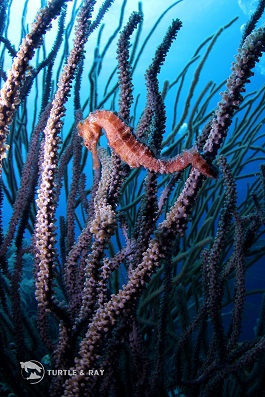
English: Seahorse
Papiamentu: Kaba di Awa
Description: Black, reddish or yellow in colour. They have a horse-shaped head, curved neck and prehensile tail. They range from 2.5 to 35.5 cm, and maintain an upright posture.
Where to spot them: In shallow water, anchored to coral, seaweed and debris.

English: Peacock Flounder
Papiamentu: Sobra di Dios
Description: Flat and oval shaped, with both eyes located on the same side of the body. Brown in colour with bright blue rings and spots. They average 35 cm in length.
Where to spot them: On sand and rock bottoms. They often blend in with the sediment.
.

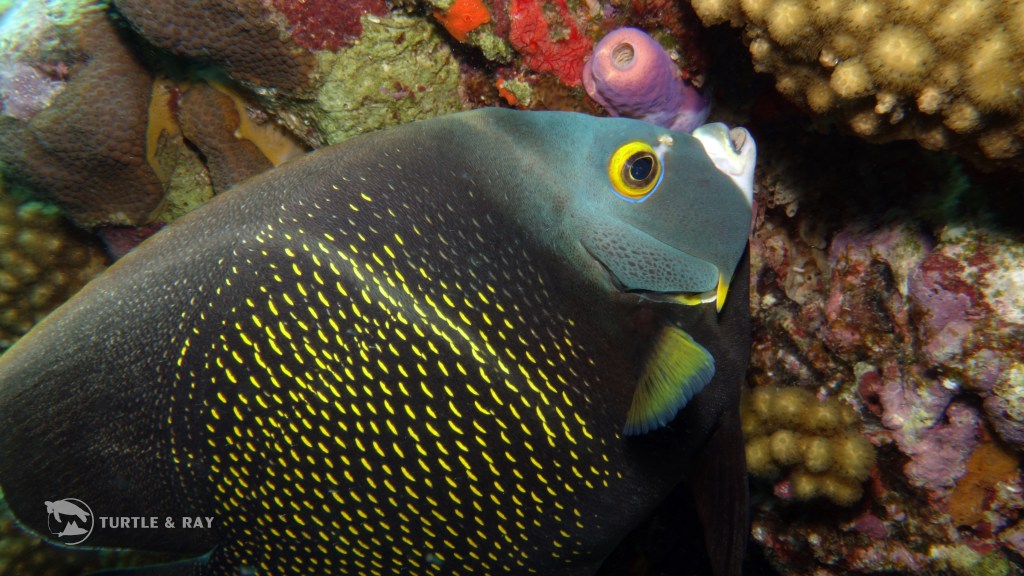
English: French Angelfish
Papiamentu: Sheu
Description: Juveniles are dark brown to blue with thick black stripes. Adults have black, yellow-rimmed scales. They are disc-shaped and reach a maximum of 40 cm.
Where to spot them: Around the reefs at depths of less than 40 m.

English: Frogfish
Papiamentu: Zumbifes
Description: Small and stocky, between 1/3 and 56 cm. Many species can change colour to camouflage with their surroundings. They use their pectoral and pelvic fins to walk along the floor.
Where to spot them: Near sponges of the same colour, or near piling, mooring weights, ropes and debris.

English: Turtles
Papiamentu: Turtuga
Description: The main types of turtles found around Curaçao are green turtles, hawksbills and loggerheads. Sea turtles weigh between 70 and 200 kg and live up to 80 years.
Where to spot them: Hawksbills can be found near the coast, loggerheads around reefs, and green turtles in shallow water.

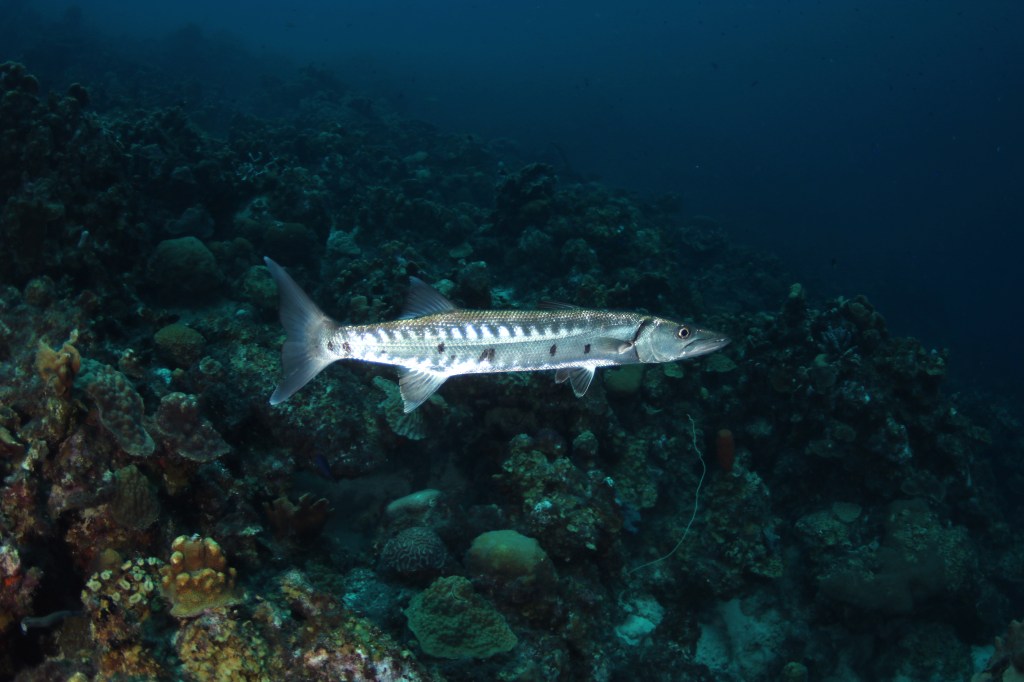
English: Barracuda
Papiamentu: Pikú
Description: Long body and sharp, knife-like teeth. They are gray-brown above and silvery below. They reach up to 2 m long.
Where to spot them: Around the edges of the reef.
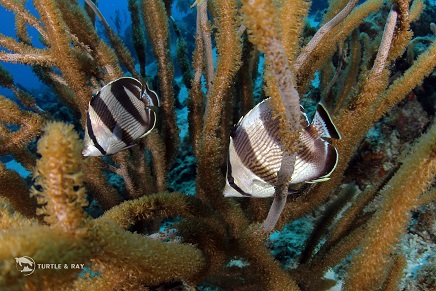
English: Butterflyfish
Papiamentu: Makamba
Description: Disc-shaped and laterally compressed, with bright colours. They often have false eye spots near the back of their body.
Where to spot them: In shallow water less than 20 m, frequently swimming in pairs.

English: Parrotfish
Papiamentu: Gutu
Description: Usually bright and colourful, with elongated bodies and blunt heads. Their teeth form a parrotlike beak from which they get their name. They eat algae from rocks and coral, which makes an audible crunching sound throughout the reef.
Where to spot them: In shallow waters, around coral and rocks.

English: Lionfish
Papiamentu: Piska León
Description: Lionfish have long, fan-like fins and brown/maroon and white bands all over the body. They have 18 venomous spines and grow up to 46 cm. They are an invasive species in the Caribbean.
Where to spot them: In nearly every marine habitat, to a depth of 100 m. (editor’s note: also found on my dinner plate when possible!!)
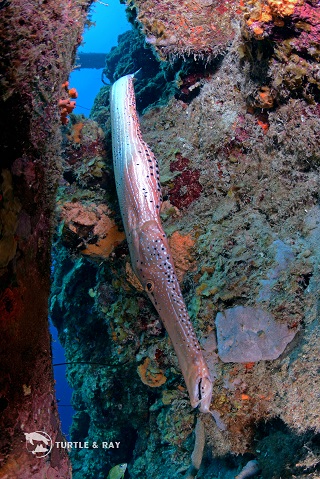
English: Trumpetfish
Papiamentu: Trompet
Description: Elongated bodies, and stiff, tube-like snouts. They vary in colour-including mottled reddish-brown, blue-grey and bright yellow. They can reach 80 cm long.
Where to spot them: Close to the rocky reefs, generally floating upright.
.

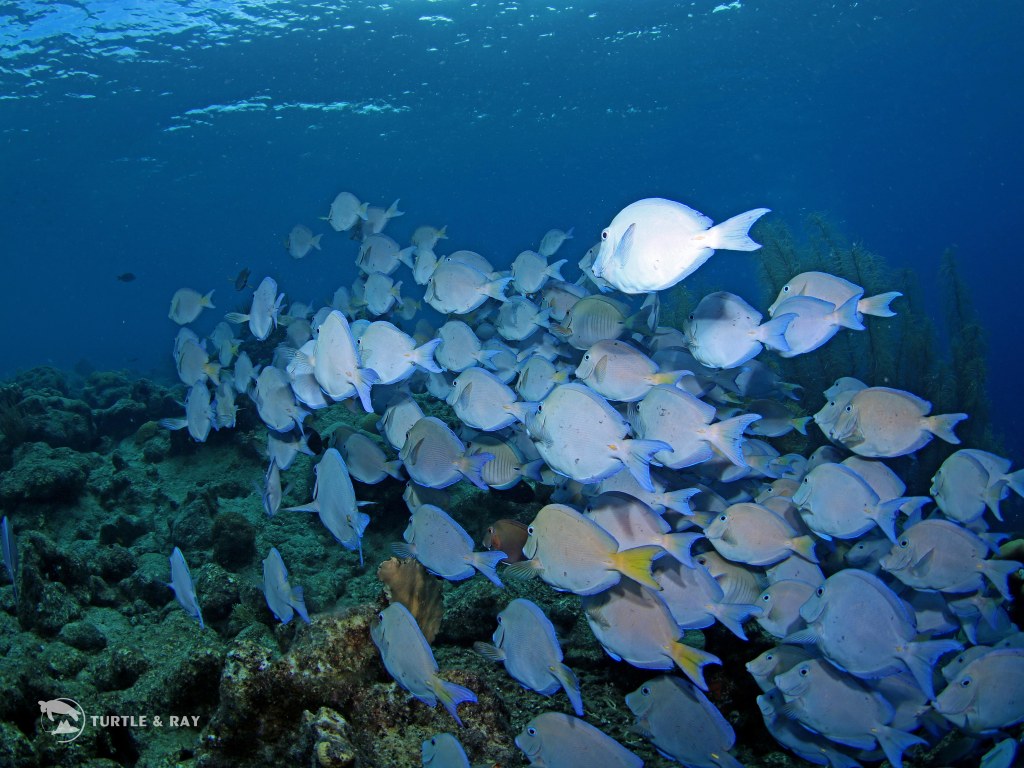
English: Blue Tang
Papiamentu: Kleinfeshi Blou
Description: Also known as surgeonfish, for the scalpel-like spine on the side of their body. They are flat with an oval body, and often solid blue. They grow up to 39 cm long and can be seen feeding in large schools.
Where to spot them: In the shallow waters on and around the reef.

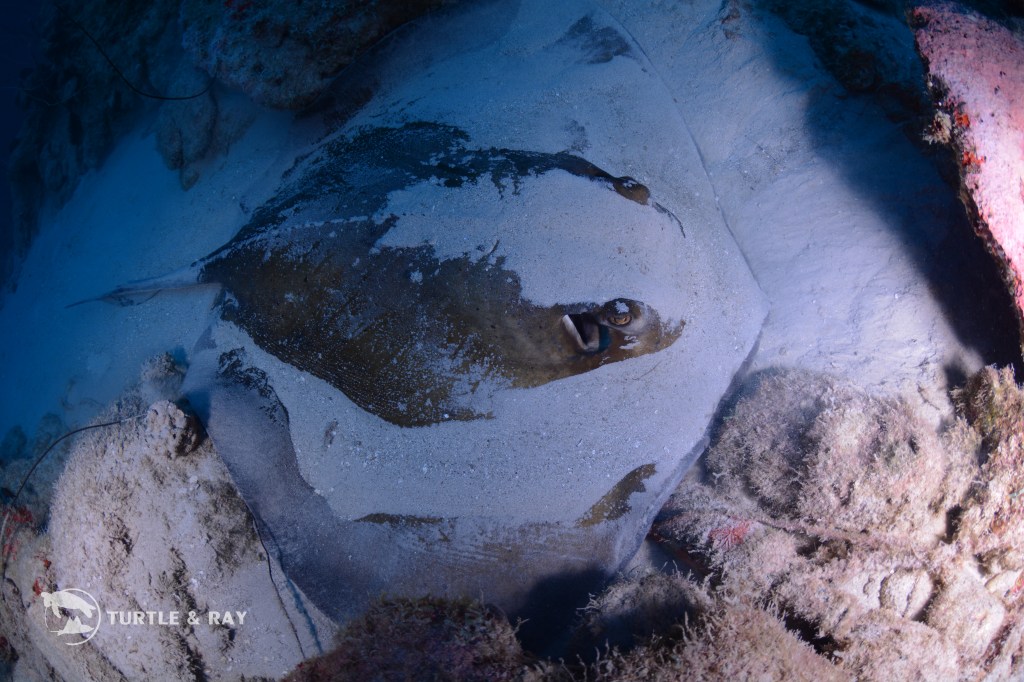
English: Southern Stingray
Papiamentu: Chuchu Rók
Description: Grey to greenish brown with a serrated spine on their tail. They have a flat, diamond shaped body. Females are the larger of the species, with disc widths reaching 150 cm.
Where to spot them: On the open bottom, often partially covered in sand.
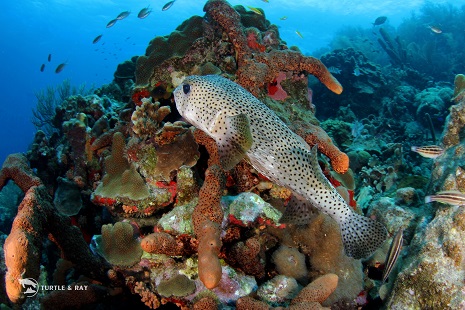
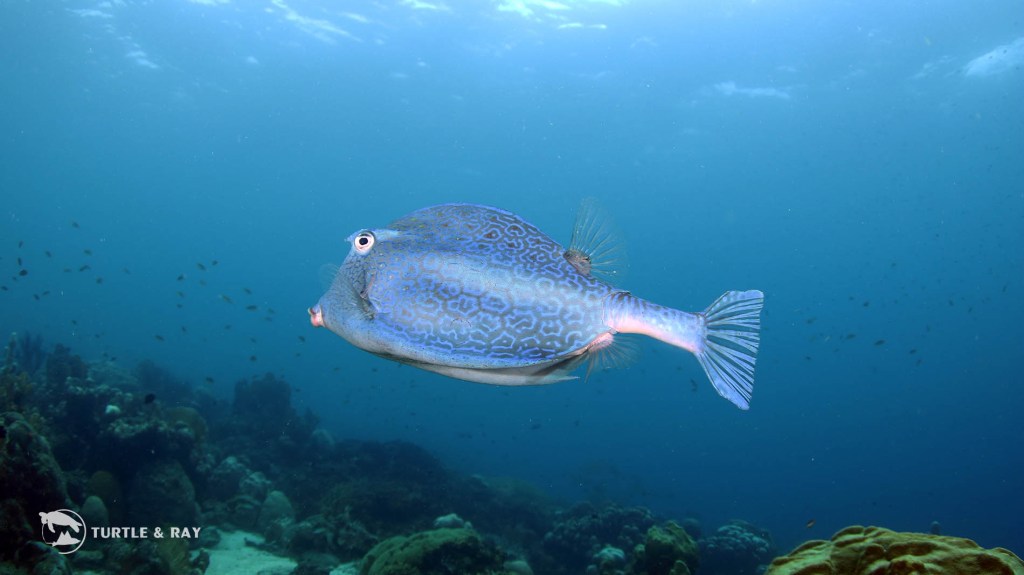
English: Porcupinefish
Papiamentu: Djindja
Description: Dark-spotted, brownish and covered in spines. They can inflate their bodies using water or air. They can grow up to 90 cm long.
Note: Not to be confused with Puffer Fish (More info: Pufferfish vs Porcupine Fish)
Where to spot them: All over the reef.

English: Green Moray
Papiamentu: Kolebra Berde
Description: Their snake-like bodies can reach a length of 180 cm. They are olive green, which comes from the colour of a layer of mucus covering their brown bodies.
Where to spot them: In the day, found with their heads sticking out of holes, cracks and crevices in the reef, down to 50 m. At night, they emerge to hunt.
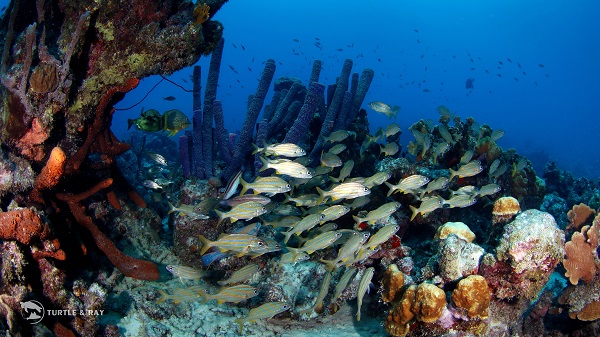
English: French Grunt
Papiamentu: Robeki
Description: Blueish white with large yellow stripes. Their bodies are oblong and up to 30 cm in length.
Where to spot them: In large shoals over reefs and wrecks to a maximum of 61 m.

English: Yellow Goatfish
Papiamentu: Barbí
Description: Goatfish can be recognized by the 2 barbels extending from their chin. They are brightly coloured and average 20 cm.
Often mistaken for Yellowtail Snapper or School Master Snapper, these are very common in Curaçao.
Where to spot them: In sandy and muddy bottoms at all depths. They are often in schools, digging through the sand.

English: Sergeant Major
Papiamentu: Katabali
Description: Blue-grey bodies with yellow on top, and 5 vertical black stripes. Their bodies are laterally compressed and around 18 cm long.
Where to spot them: In shoals all over the reef.
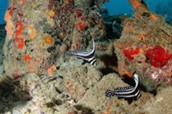
English: Spotted Drum
Papiamentu: Rei di Laman
Description: Growing up to 24 cm, they have vertical dark-brown and white stripes on their tails and dorsal fins, and horizontal stripes on the body.
Where to find them: At the base of the reef, under ledges and near small caves. They’re generally found between 3 and 30 m deep.
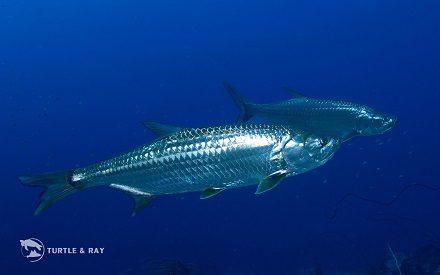
English: Tarpon
Papiamentu: Sábalo
Description: Pelagic fish with shiny, silvery scales. They range between 1.2m and 2.4 m. They have prominent lower jaws that jut out from the face.
Where to spot them: In the open waters around the reef.
Special thanks to Hannah and all the great people at Turtle & Ray!




 Curaçao 4 Canadians
Pingback: Eels vs. Sea Snakes: A Tale of Two Slithering Sea-Dwellers | Curaçao 4 Canadians
Pingback: Taking Great Underwater Pictures with Basic Gear | Curaçao 4 Canadians