The topic of accessibility comes up more and more often these days. In many Canadian cities, there are committees, charities, etc., that try to help municipalities and businesses improve accessibility, and there even some laws that outline how things should be done. Accessibility certainly isn’t perfect in Canada, but it is better than in many countries. In Curaçao, accessibility is improving, but it has a long way to go.
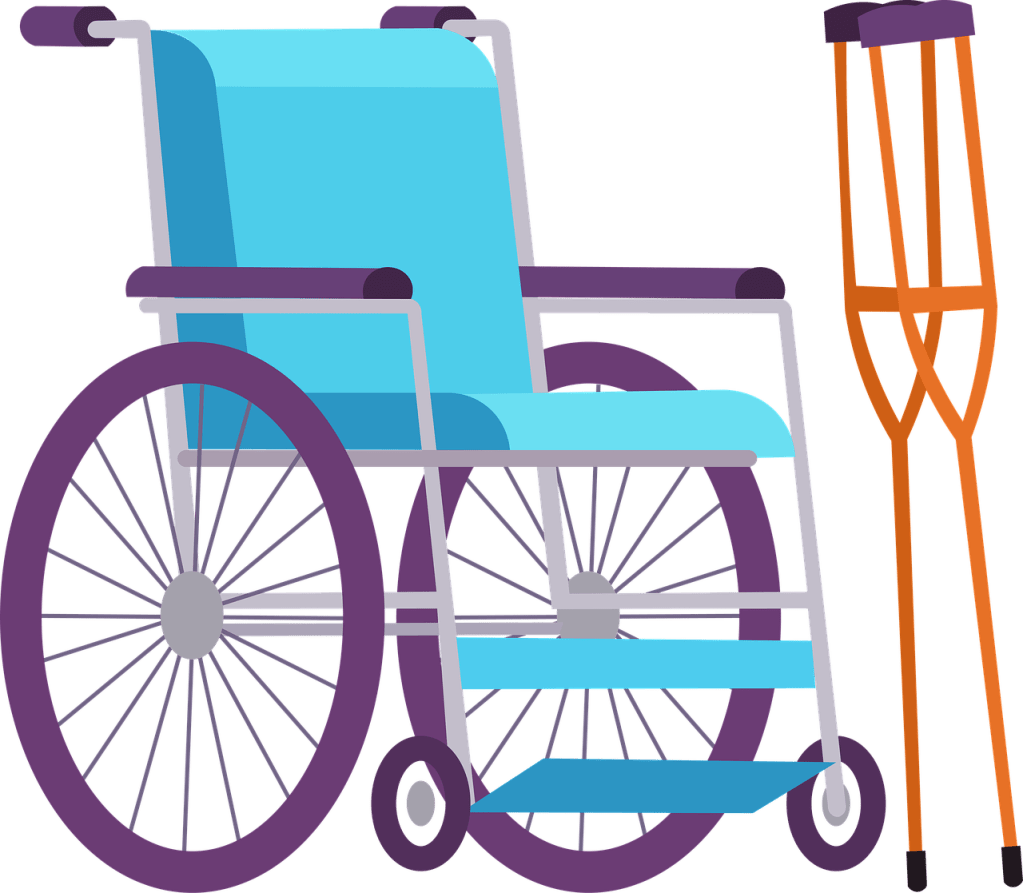
It has taken me a very long time to write this article because of a few factors. First, things are changing and new construction seems to be taking accessibility into consideration more and more. Second, I party too much and get distracted a lot. Third, and most important, I wanted to consult with visitors who had varying levels of mobility issues, and in doing so, I encountered a wide array of opinions. Sorting through it all was difficult, but I’ll give it try.
I consulted with 4 individuals, each with different levels of mobility impairment, from mild to 100% wheelchair user. They were all well-traveled, and had excellent feedback to provide, but their opinions were very different. Two of them said they were super impressed with Curaçao’s accessibility and had very few issues. One said they had some issues, which I’ll describe later in this article. One stated they found the level of accessibility horrible and were very disappointed. What I figured out was, depending on what a person wants to do, their level of impairment, and their expectations, their experience could be very different.
Now I’ll get into more specifics.
Accommodations:
Some newer, or some higher end hotels and resorts will have elevators, ramps, etc., but very few have true accessibility options like extra wide, sliding doors, zero transition bath/shower, grab bars, etc. Very few homes (Airbnb/Vrbo/etc.) will have any of these types of options.
The only fully accessible hotel in Curaçao is Dolphin Suites. They have all the things listed above, plus access to lifts, beach wheel chairs, staff trained in proper assistance, and connections with medical supply places to get any other items a person would need. They also have a deal for wheelchair accessible beach access with Sea Aquarium Beach, right next door. Dolphin Suites also has a wheelchair bus and arranges accessible excursions. If you need true accessibility, this is, by far, the best option. This place is truly impressive.
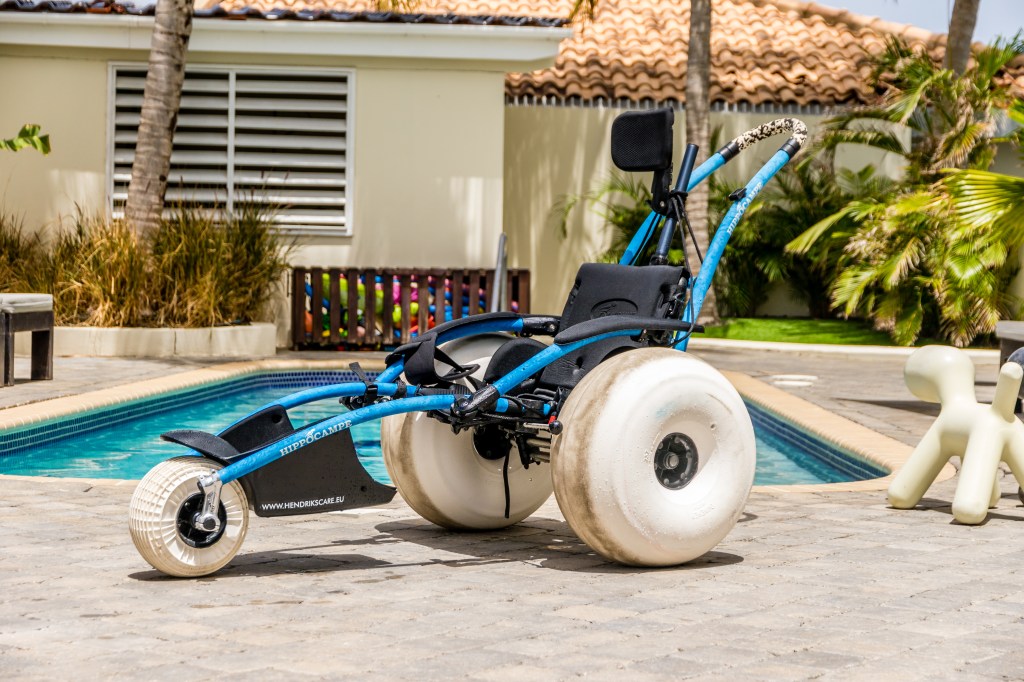
Of the people I consulted with, they all agreed that when checking ads, some places were listed as “accessible” but really weren’t. One was shocked at how accessible the resort they stayed was. Another was very disappointed that a place described as accessible had stairs, no ramps, etc. In other words, before booking, ask direct and pointed questions to make sure you get what you need.
Shopping/Getting Around
Much like accommodations, accessibility in this regard varies widely as well.
The first thing you’ll encounter is the airport. The Hato International Airport is quite accessible, with elevators, ramps, and people to assist when needed. When you arrive, there will be a walkway from the plane to the terminal…no stairs to get off the plane. It may seem like a small thing, but for many people, this is super important.
There are few taxis that have accessible vehicles. There is one drive service that I am aware of that has fully accessible vehicles, Wheelee. I’m not aware of any others. I’m not sure about renting accessible vehicles. I haven’t seen that. If people read this and provide more clarity, I will update as info comes in.
Some places like Mambo Beach, the Rif Fort, Eden Mall, Sambil Mall, etc., have ramps and elevators. Even some restaurants, like Swinging Old Lady have an elevator. Many have no ramps or elevators at all. I have seen many stores with “ramps”, but they are so steep, I’m not sure how anyone would push a wheelchair up them. Some areas have sloped curbs, others don’t. Obviously, cobblestone, like in Punda, can create a less than smooth ride.
Beaches/Activities
Some beaches are level with the parking (Cas Abao, Tugboat Beach, Kokomo, Porto Marie, Blue Bay, Daaibooi, etc.). Very few seem to have any type of boardwalk or sidewalk that would get a wheelchair close to the water. Many beaches, like Playa Kalki, Play Forti, etc., have steep stair cases and are completely inaccessible by wheelchair. Sea Aquarium Beach is wheelchair accessible, so are parts of Mambo Beach, and Marie Pampoen actually has a ramp going into the water, but I’m not aware of any others. Dolphin Suites even has fully accessible excursions available, including scuba diving. The people I consulted with all stated that people at hotels, stores, beaches, and excursions (even boat excursions) went out of their way to assist when needed so they could enjoy the activities. People in Curaçao tend to be very friendly and helpful, so this does not surprise me.
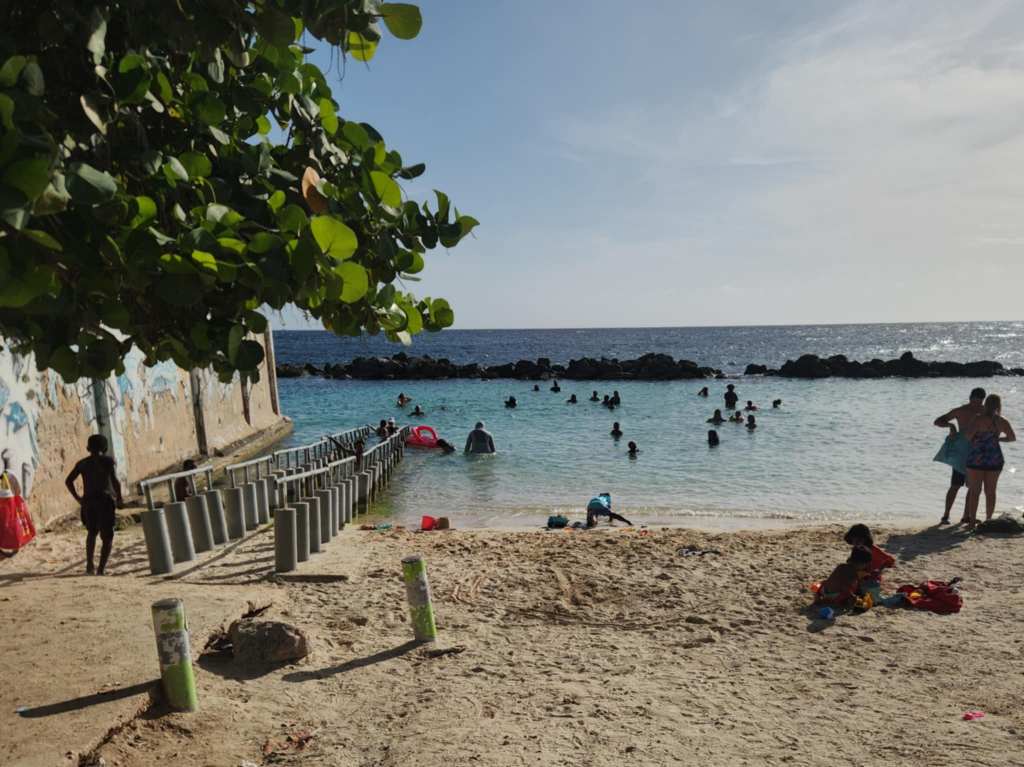
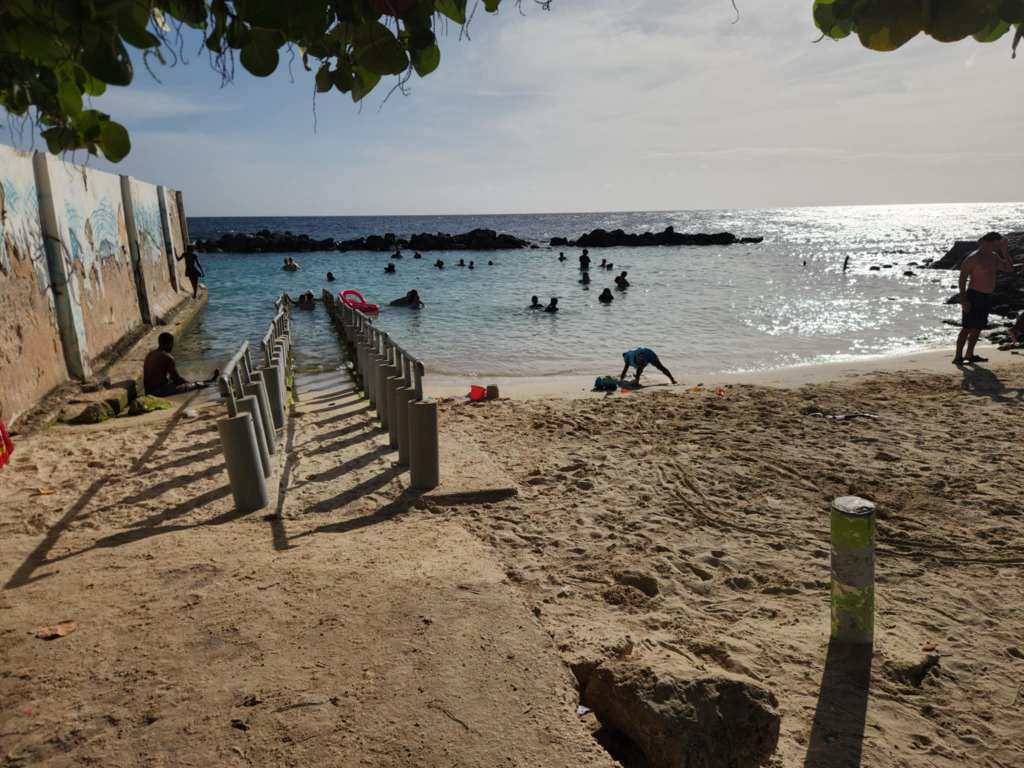
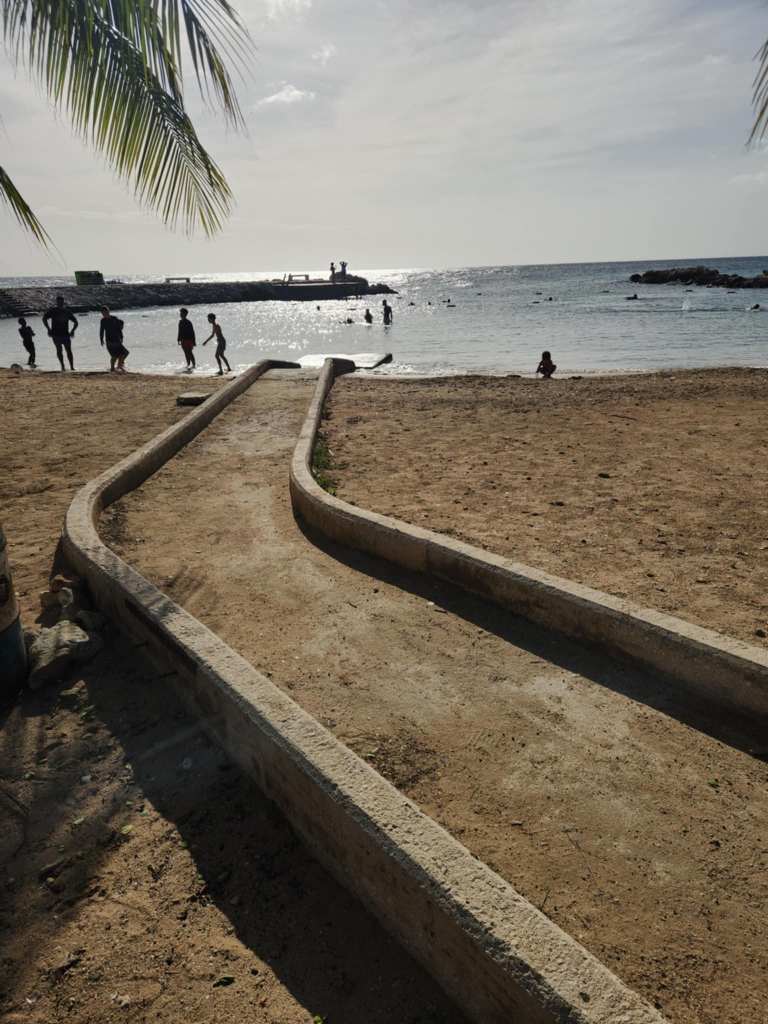
*Photo of ramps at Marie Pampoen
Conclusion:
In general, Curaçao is not as consistently accessible as most major Canadian cities, and standards here are not as consistent, so experiences may vary. One of the people I consulted with is very well traveled, and they stated that Curaçao was the most accessible place they had been to. This is comparing to Mexico, Cuba, Dominican Republic, Jamaica, St Lucia, Martinique, Panama and Guadeloupe. If you’ve been to any of those places, this might provide you some perspective.
It is very important to ask questions and research well prior to arrival. Contact local businesses via email or WhatsApp for more help and don’t be shy to politely ask for what you need.
I realize this article is not a super thorough analysis of accessibility, but I am hoping that it will generate some conversation so that it can evolve into a much more helpful tool.
Big special thanks to people that provided feedback to me regarding this topic.


You must be logged in to post a comment.